Seen “2D Laser by Barco” in a cinema programme and wondering what it means? It is projection with a Barco laser DCI projector: a sharper image, higher brightness and stable colours with no xenon lamp. For a quick overview see laser projection by Barco. Below is a detailed look at why cinemas are switching from xenon to laser.
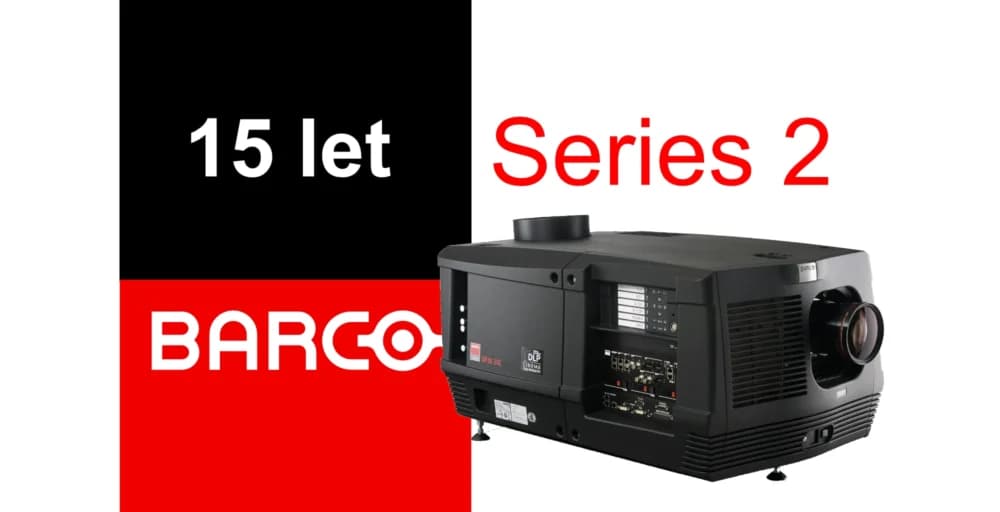
Imagine that your cinema projector has been serving you faithfully for 15 years. That is exactly how long the Barco Series 2 digital projectors, which kicked off the era of digital cinema around 2009/2010, have been on the market. These machines became the standard in many cinemas around the world and made it possible to screen in both 2D and 3D, from small auditoriums all the way to giant screens. Cinema operators came to love the Barco Series 2 for its modular design and reliability, with many parts being interchangeable across models. Barco still provides service support to this day, and even offers a retrofit, a conversion of an existing lamp-based projector to laser. The question, however, presents itself: doesn't your cinema deserve a complete move to a modern laser projector by now? Let us take a look at the reasons why right now is the time to consider an upgrade.
A brief history of the Barco Series 2 success story
Barco introduced the Series 2 platform at the end of the first decade of the 21st century as the successor to the original digital projectors. These new projectors quickly earned DCI certification (meeting the strict Digital Cinema standards), and at the ShoWest 2010 trade show Barco showcased a complete lineup of six models. For small and mid-size auditoriums the range offered the C series (the compact DP2K "C-series" with a 0.98" DLP chip), and for large auditoriums the more powerful B-series with a larger 1.2" DLP chip. The flagship DP2K-32B model then carried the title of "the brightest digital cinema projector on the planet" thanks to a light output of more than 30,000 lumens. The versatility and performance of the new range made it the industry standard: by the end of 2010 Barco had delivered a record number of digital projectors and won over major cinema chains around the world. Among other things, operators valued the easy maintenance thanks to the modular design and unified spare parts across the entire Series 2. It is no wonder that many of these projectors are still screening reliably today.
The current situation: service, support, and retrofit options
Even after 15 years in operation, the Barco "Series 2" projectors are by no means written-off scrap metal. The manufacturer (today represented in the cinema industry by Cinionic, a Barco joint venture) continues to provide service support, from replacement lamps and parts all the way to software updates. A big draw is then the Laser Light Upgrade kit, in other words a laser retrofit. It is a kit that can replace the xenon lamp module with a laser light source in an existing Series 2 projector. This upgrade is carried out by a certified technician right at your location and can be finished in as little as 4 hours, so the downtime is minimal. For cinema operators it is a more affordable path to laser than buying an entirely new projector. It is therefore no surprise that there is interest in this solution: more than 50 cinema operators in 25 countries worldwide have already chosen the Laser Light Upgrade, and over 3,000 projectors have gone through this rejuvenating treatment. Thanks to the retrofit, your existing projector can gain up to another 30,000 hours of life with laser, and the manufacturer provides a 5-year warranty on the laser components.
The laser retrofit therefore represents a middle-ground solution for cinemas that want to enjoy the benefits of laser but do not yet want to invest in entirely new equipment. It is worth keeping in mind, however, that with a retrofit the rest of the projector stays old: the electronics, cooling, optics, and DLP chips are still the ones designed 15 years ago. If your projector is relatively "young" (say, installed toward the end of the Series 2 era) and in good condition, a retrofit can make perfect sense. With very old units, though, the question may arise of whether it is worth upgrading only the light source when the other key components have also seen plenty of service. In that case, it makes sense to consider a complete projector replacement with a new laser model. Both approaches can even be combined, as Wim Buyens, CEO of Cinionic, noted: "Customers want a mix of both. They upgrade their newer projectors (to laser) and simply replace the older ones with new units. This allows us a faster transition to laser wherever the customer wants it."
The benefits of laser projection: quality, savings, freedom from maintenance
So why should a cinema actually switch to laser projection? There are plenty of reasons, and they are not only about saving on bulbs. Modern laser projectors deliver visibly better image quality: higher and steady brightness, better color reproduction, and contrast that barely changes over time. It is well known that as xenon lamps age, their brightness drops and their color rendition can shift slightly. Laser, by contrast, shines consistently: from the first hour to the ten-thousandth it projects just as brightly, so viewers will get the same experience at the start of the season as at its end. The colors, too, can be richer with laser; RGB laser systems in particular achieve a wider color gamut than lamps, which means a more vivid image.
Just as important is energy efficiency. Laser light sources are far more efficient at converting electricity into light and produce less waste heat. At the UK Cinema Association conference, for example, they demonstrated a consumption comparison: laser used 70% less energy than a comparable xenon projector. This roughly 70% saving in electricity is also cited by the manufacturer itself (Cinionic) when comparing laser and lamp-based cinema over the long term. That is not negligible: on the one hand it lowers electricity bills, and on the other, less heating in the projection booth means lower demands on air conditioning and ventilation. Running a cinema thus becomes more environmentally friendly and sustainable, with a lower carbon footprint, which is increasingly valued today.
Laser also dramatically reduces service and operating costs. Forget about regularly ordering, storing, and replacing lamps every few months. A xenon lamp typically lasts only 500 to 1000 hours of operation, after which it burns out and has to be replaced. By contrast, a laser light source can shine for something like 30,000 to 50,000 hours before it drops below the recommended brightness level. To put that in perspective, that is many years of continuous operation. In practice, then, a laser projector does not need its light source replaced for its entire lifespan. That eliminates the hassle of sourcing new lamps, of safely disposing of them (xenon lamps are pressurized vessels and must be disposed of by professionals), and of maintaining optics fouled by the byproducts of lamp combustion. Technicians no longer have to run into the booth as often to change lamps and adjust the projector, which for you means fewer service callouts and costs. Laser systems also usually have built-in redundancy: they consist of many laser diodes, so the failure of a few of them does not immediately mean a projection outage (just a slight drop in brightness). The reliability of the light source is therefore higher and cinema operation runs more smoothly.
In short: a laser projector offers a better picture, stable performance, energy savings, and virtually maintenance-free operation. Those are tempting benefits for any cinema operator who does not want to fuss over the equipment more than necessary and wants to offer audiences the very best.
Why is now the right time to upgrade?
You may be thinking that the benefits of laser are nothing new, so why not wait a few more years? The truth is that several factors have now come together that make the switch to laser an especially sensible step. The technology has matured and, compared with the early years, it is more affordable today. When the first laser cinema projectors appeared around 2014, they cost hundreds of thousands of dollars and were deployed only in exceptional cases. Today, a decade later, their price has fallen to a fraction, roughly one-tenth of the original figures. Laser has become the standard for new installations: it is currently estimated that fewer than 20% of newly sold cinema projectors are still lamp-based. In other words, the vast majority of new cinemas already opt for laser, and lamp-based cinema systems are slowly coming to an end. Overall, the share of laser projectors in cinemas worldwide is still around 13%, which means that many cinemas (including small ones) have the transition still ahead of them. But now is the moment when things come to a head: manufacturers (Barco, but also its competitors) have completely switched to a laser portfolio and offer solutions for every type of auditorium. Barco even moved to a 100% laser lineup in its cinema program back in 2021.
Another strong motivator is external circumstances: economic and environmental pressures. In recent years electricity prices have risen sharply (particularly in Europe) and running a cinema has become more expensive. Suddenly it is becoming clear that an investment in more efficient technology quickly pays for itself through the energy saved. According to analyses by projector manufacturer NEC, at current electricity prices an investment in a laser projector pays off in roughly 30 months for a small auditorium and within 5 years for a large one. Over the lifespan of the equipment, that is a very short time. When you add the savings on consumables (lamps, filters) and service, the total cost of ownership (TCO) simply works out better for laser. Whoever upgrades sooner starts saving sooner, so putting off modernization costs you more money every year, money that need not be spent at all.
Just as important is the pressure for ecology and sustainability. Like other businesses, cinemas are committing to the responsibility of reducing their energy and waste consumption. Switching to laser is a visible step toward a greener cinema: you cut your electricity draw, you stop throwing away old lamps every few months, and you save the emissions tied to their manufacture and transport. You can also communicate this to the public: some multiplexes today emphasize in their marketing that they screen with laser, which signals modernity and an environmentally conscious approach. Audiences are increasingly sensitive both to the quality of the experience and to a cinema's responsibility; having "Laser Projection" can therefore also be a competitive advantage in the eyes of visitors.
And why precisely now? Beyond the availability of the technology and external pressures, there is also the fact that your original Series 2 equipment already has some mileage on it. After 10 to 15 years of intensive operation, failures of the electronics or mechanics can simply occur as a result of age. Spare parts may become harder to source in the future, and even though Barco currently maintains support, it is clear that its primary focus is on the new laser ranges. By modernizing in time you head off the risk of larger outages down the road and secure a smooth transition for when lamp-based technology finally reaches the end of the line. To put it briefly: investing in laser now means moving with the trend, reaping the maximum benefits, and avoiding unnecessary problems.
The strength of the Barco brand: innovation and reliability against the competition
The digital projection market today is home to several renowned manufacturers (such as Christie, NEC, Sony, and others), all of which offer laser cinema projectors. So why stay with, or choose, Barco in particular? This Belgian brand has built an exceptional reputation in the cinema industry. Barco is a global leader in cinema projection: its projectors can be found today in more than half of the cinemas around the world. The company has a solution for every type of auditorium: from small single-screen cinemas (compact models with lower brightness and, where needed, a quiet "boothless" design) all the way to the largest auditoriums with giant screens (powerful 4K laser projectors for IMAX and large multiplexes). On top of that, Barco offers a comprehensive product portfolio, for example the integrated Auro 11.1 cinema speakers, its own cinema server (Barco Alchemy), and more, while still remaining open to standards (it integrates easily into existing infrastructure and works with TMS systems, audio processors, and so on).
An important argument is also technological leadership and innovation. Over the past years Barco has continually pushed the boundaries: in 2014 it introduced the first laser projector with 6P (six primary colors) for top-tier 3D projection, and in 2015 it launched an affordable laser phosphor projector with 18,000 lumens, making laser accessible to a wide range of cinemas. By 2016 it had expanded its laser portfolio for every cinema segment, and in 2021 it became the very first manufacturer whose entire cinema projector lineup is laser only. This continuity of innovation shows that Barco not only keeps pace but often sets the direction of development. Customers can thus be confident that they are buying equipment from a company that will still be setting the tone (and providing support, an upgrade path, and so on) 10 years from now.
Barco also excels in customer support and service. Through Cinionic and a network of partners it offers global coverage, from financing and equipment rental all the way to round-the-clock technical support and operator training. When you invest in a Barco projector, you are not just buying "a box with a lens", you are entering the ecosystem of a renowned brand. That brand declares itself to be a "partner for the entire cinema life cycle", which in practice means the availability of spare parts, regular upgrades (see the aforementioned Laser Light Upgrade), and experts on the phone whenever needed. You can therefore rely on not being left on your own, which is crucial for a small single-screen cinema that often does not have its own technician.
Compared with the competition, Barco has one more practical advantage for those who already own a Series 2: continuity. If you move to a new Barco (or upgrade your existing one), many things will be familiar, from the control interface through compatibility with your existing equipment (lenses, automation) all the way to the established service channel in the Czech Republic. So you do not have to "reinvent the wheel" and learn entirely new procedures. What is more, Barco projectors are known for their modular architecture, so even the new ranges retain the philosophy of easy module replacement and unified components that you may have come to know with the Series 2. All of this reduces potential downtime and makes maintenance easier, which every cinema operator will appreciate.
Financial benefits and return on investment
Every cinema, of course, has to count the costs. Switching to a laser projector is no small investment: for small single-screen cinemas it can run into the low single-digit millions of CZK (depending on the model and configuration). It is therefore reasonable to consider whether and when this investment will pay off. As we discussed above, laser saves costs in several areas at once: first, it significantly reduces electricity consumption (by up to 50 to 70%), second, it eliminates the need to regularly buy new lamps (a single xenon lamp can cost tens of thousands of CZK, and over 10 years you will go through a large number of them), and third, it minimizes service demands (fewer technician visits, fewer unplanned repairs caused by overheating or a cracked lamp, and so on). When you add up these savings, you may arrive at a surprisingly short payback period. Foreign studies have shown that small auditoriums can recoup their laser investment in about 2.5 years of operation thanks to the savings. For larger cinemas it may be closer to five years, but that is still significantly less than the old equipment's lifespan used to be. Once it is paid off, the projector then becomes a "cash cow": it keeps screening, but the costs are minimal, so it generates better cash flow.
It is also worth mentioning that the price of laser projectors is falling and that manufacturers or suppliers often offer various forms of financing. Barco/Cinionic makes no secret of wanting to make the transition to laser easier for cinemas, so "as-a-Service" financing models (projector as a service), operating leases, or discounted packages for bulk technology upgrades may be available. For a single-screen cinema, it can be attractive, for example, to spread the investment over several years, where the installments can effectively be covered by the savings on electricity and lamps. The result is that the cinema does not have significantly higher monthly costs than before, yet from the very start it benefits from better projection and lower consumption. From the standpoint of overall operating economics, an upgrade therefore makes sense: instead of pouring money "into the old" (more expensive operation, the gradual repair of outdated equipment), you shift your funds into new technology that pays for itself and on top of that raises the quality of your services.
In conclusion: prepare your cinema for the future
The Barco Series 2 projectors were outstanding workhorses of cinema digitization and still serve reliably in many places today. The manufacturer has shown them great support: 15 years of continuous service and the option to convert to laser are proof that it values its customers. Technological development, however, has not stood still. Laser projection has become the new standard, raising both the quality of the experience and the economics of operation to a higher level. If you run a small single-screen cinema, you may now be weighing what to do next: replace the lamp, or the whole projector right away? Every cinema's situation is a little different, but the general trend is clear. The time has come to move to laser.
Audiences expect a top-tier picture, sharp and bright like in modern multiplexes. At the same time, you as the operator need to keep an eye on costs and reliability. A new laser projector from a renowned brand (such as Barco) will help you achieve both: you will offer brilliant projection, save on operation, and have the peace of mind that your technical setup is ready for years to come. When you look back in a few years on the decision to switch to laser, you will probably say to yourself: "Why didn't we do it sooner?" Your cinema certainly deserves the upgrade, and your audiences will reward it with applause in the middle of the show, this time quite literally in the light of laser.
Bring laser projection into your cinema and screen films more economically, more sharply, and with the assurance that you are ready for the future. Your screen will never want any other light source again.